Discovery of a “universal enzyme” that makes all four nucleotide building blocks of life
A bacterial enzyme called universal PPK2 may simplify and lower the cost of RNA synthesis
What the research is about
Inside our cells, DNA—the blueprint of life—and RNA, which supports cellular functions based on that blueprint, are constantly being produced. Both DNA and RNA are made up of small molecules called nucleotides that link together like building blocks. There are four types of nucleotides used to make RNA, and these molecules also serve as energy carriers in living systems.
An enzyme called polyphosphate kinase (PPK) plays a key role in converting nucleotides into their energy-rich forms. The molecule used in this process, polyphosphate, consists of repeating phosphate units linked together in a chain and is widely found in nature. Because of its close relationship with nucleotides—key energy molecules in cells—polyphosphate has attracted attention as a clue to how living organisms developed systems to use energy.
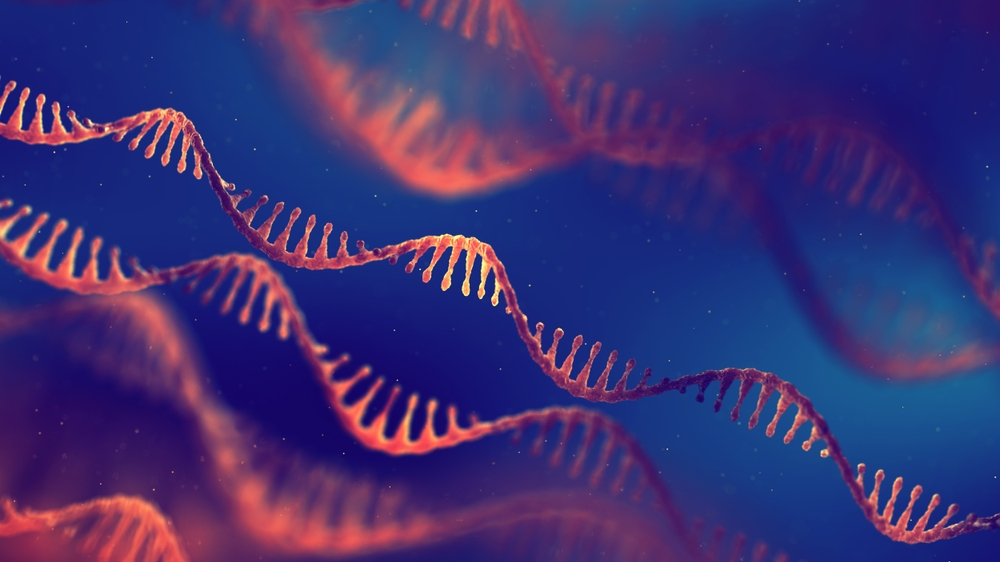
However, previously known PPK enzymes had a limitation: they could only produce certain types of nucleotides. RNA synthesis requires four different nucleotides, yet no single enzyme had been found that could efficiently produce all of them.
A research team led by Professor Tomoaki Matsuura and Specially Appointed Associate Professor Liam Longo at Institute of Science Tokyo (Science Tokyo) explored this question by examining enzymes from various microorganisms. They discovered a previously unknown enzyme in the bacterium Mangrovibacterium marinum, which was found in coastal sediment in China.
This enzyme can efficiently produce all four nucleotide triphosphates—the forms required for RNA synthesis—from eight types of starting materials: four nucleotide monophosphates and four nucleotide diphosphates. (Nucleotides can have one, two, or three phosphate groups, and those with more phosphates store more energy.)
Because of its ability to work with a wide range of substrates, the researchers named this enzyme universal PPK2.
Why this matters
Experiments showed that a universal PPK2 can convert about 70% of these starting materials into nucleotide triphosphates. Even more remarkably, at 55°C, the enzyme was able to produce polyphosphate chains containing up to 30 phosphate units—far exceeding the previous record of nine.
The research team also investigated why this enzyme can work with such a wide variety of molecules. Although many details remain unclear, their results suggest that the flexible three-dimensional structure of the enzyme allows it to accept different types of substrates.
Another important achievement was demonstrating that RNA synthesis can be carried out in a single test tube using nucleotides produced by this enzyme.
Previously, producing the four nucleotide triphosphates required multiple starting materials and six different enzymes. In contrast, this new method can generate all four using just one enzyme in a one-pot process, greatly simplifying RNA synthesis.
What’s next
This enzyme could make it much easier to produce the building blocks of DNA and RNA, opening the door to simpler and more efficient processes. It may also contribute to advances in RNA-based medicines and vaccines.
In addition, polyphosphate is thought to have existed on early Earth. This discovery may therefore provide new insights into how life developed complex chemical systems over time.
By connecting fundamental research on how life works with practical applications in biotechnology, this study is expected to inspire further advances in both fields.
Comment from the researcher
Early life forms likely had much smaller genomes than modern organisms and relied on only a limited number of enzymes. This suggests that a small set of enzymes once controlled a wide range of chemical reactions.
We believe that the enzyme discovered in this study may retain some of these ancient properties. Interestingly, these characteristics may also be useful for modern biotechnology. This work demonstrates how fundamental research in enzymology can lead to practical applications, highlighting the importance of basic science.
In the future, we plan to further investigate the properties of this enzyme and search for similar enzymes with ancient characteristics. We are excited to see what new discoveries may emerge.
(Matsuura Tomoaki, Professor, Earth-Life Science Institute, Institute of Future Science, Institute of Science Tokyo)

Dive deeper


Contact
Research Support Service Desk