Study and prepare for entrance exams like a Science Tokyo student
The real Science Tokyo #3

This series seeks to reveal the “real” Science Tokyo from a student’s point of view based on reporting by Science Tokyo’s “PR Supporters.”
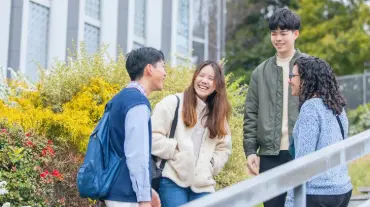
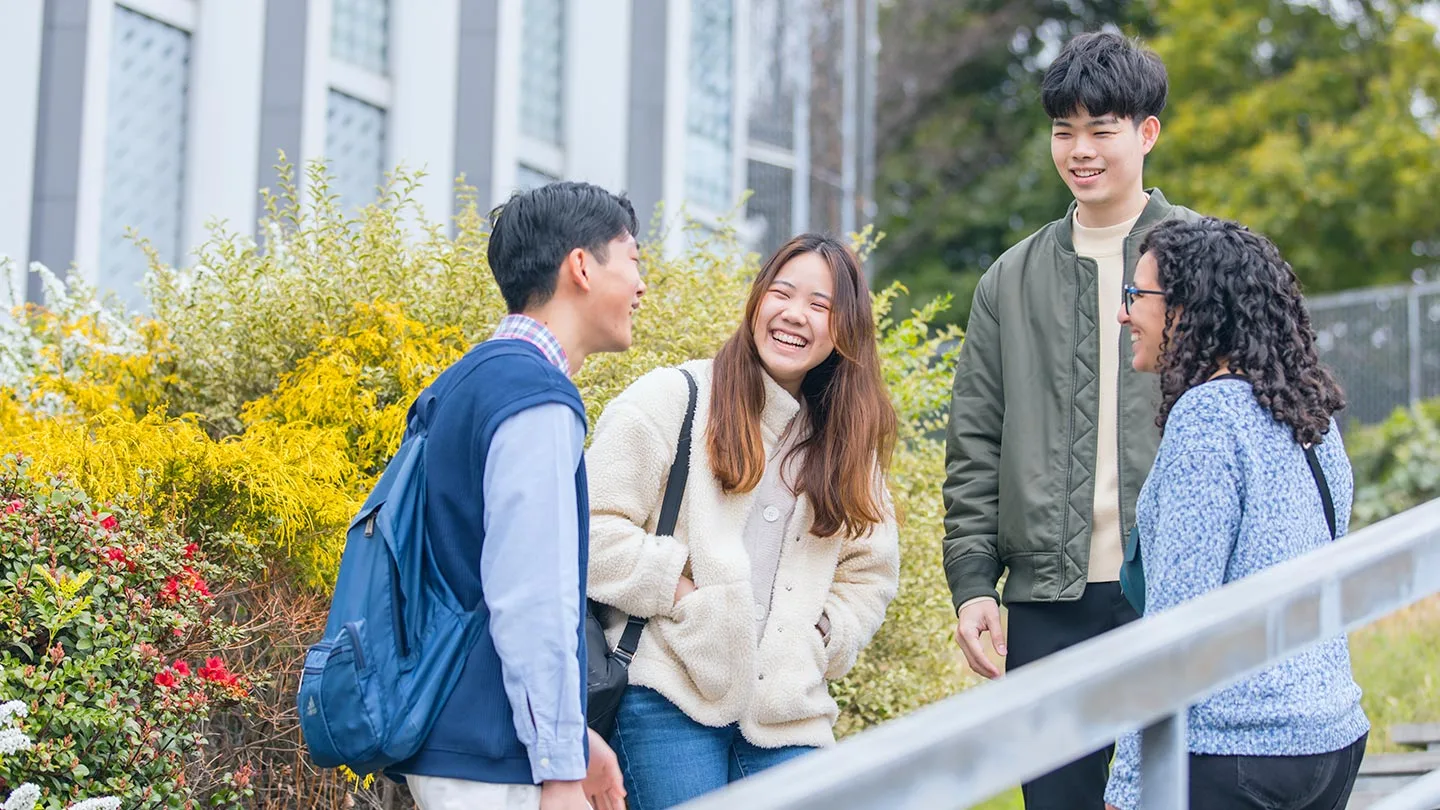
How did current Science Tokyo students prepare for their entrance exams? We asked four PR Supporters, who help promote the Institute’s public relations activities, to share their study methods and tips.
Early to bed, early to rise, and 15-minute naps
4th-year, Faculty of Medicine
My recommended study methods
When I was preparing for entrance exams, I made a point of going to bed early and waking up early. I used to go to bed around 10 at night and wake up at 5 in the morning. It’s easy to start feeling stressed or anxious at a time like this, so I tried to take care of my health and get enough sleep every day. Also, if I got stuck solving a problem, or felt sleepy even though I really needed to study, I would take a 15-minute nap. Just one 15-minute nap would clear my head and help me feel less tired! If you try the same thing but still feel tired, I think it’s perfectly fine to just go to bed and resume studying early the next morning.
Must-know tips
Whenever my grades didn’t improve as much as I’d hoped, or when I felt lonely, I would try talking to my friends and teachers. Instead of keeping your worries bottled up inside, talking about them with the people around you can help you gain a new perspective. Also, you may find that your friends were struggling with the same issues. Being supportive of each other really helps to get through the entrance exam period. Stay close to the friends working hard with you, remember to appreciate the people supporting you, and keep pushing forward with your studies!
Stay focused by getting out of the house and make every spare minute count
2nd-year, School of Environment and Society
My recommended study methods
After school, I would study in the study room, and on weekends, I would spend all day studying at a nearby community center or the library. When I was at home, I would completely switch off and lose all focus, so when I was preparing for the entrance exams, I tried to get out of the house in the morning even on days when I didn’t feel motivated. I used to wake up at 6 to study, but as I gradually started waking up later and had less time to study, I ended up starting around 8 in the morning and finishing at 11 at night.
Since I tried not to cut down on sleep, I made the most of the time I was awake. Specifically, I would try to find a few spare minutes here and there, such as while waiting at a crosswalk or for the community center to open, to study subjects that required a lot of memorization, like English vocabulary, classical Japanese vocabulary, or inorganic chemistry. I would also listen to videos by overseas YouTubers, such as English-learning videos and vlogs, to improve my listening skills while on my way to and from school.
I also tried to keep the amount of stationery and study materials that I carried around to a minimum. I chose to carry around black, red, and blue ballpoint pens, a mechanical pencil, an eraser, sticky notes, and a lot of blank B5-size paper. Reducing what I carried around helped me spend less time deciding which pen or notebook to use, and I think it also helped me feel less stressed and more relaxed. I mainly focused on output while studying, like writing out the solutions to problems from my math workbook, so I basically studied by writing nonstop with a black pen. I also kept the number of workbooks I used to a minimum, and kept practicing the same one repeatedly until I felt I had mastered it.
Must-know tips
I think visiting the exam venue the day before helped reduce my anxiety on the day of the exam. I also think studying ahead in English and math before the end of my second year of high school gave me more time to review in my third year, which was helpful. When I entered high school, I was told that it was a good idea to start studying English vocabulary and classical Japanese vocabulary early. Since I frequently practiced using vocab study books starting from my first year of high school, I never really struggled with vocabulary.
Mastering school materials and building vocabulary early
1st-year, Faculty of Dentistry
My recommended study methods
I went to a public high school in a rural area, and until I started working on past exam questions, I mostly just prepared for and reviewed the materials provided at school. I think it is more effective to make sure you can solve the problems you got wrong the first time than to work on too many different problems and run out of time to review.
Looking back, there was one thing I’m really glad I did myself: getting an English vocab study book to practice with. Instead of buying a book with overly difficult vocabulary, I picked one aimed at students preparing for highly competitive universities. I did my best to master almost all of it by the summer of my third year. After that, whenever I came across a new word, I would learn it then and there.
I also think it's important from a psychological standpoint to not push yourself too hard. As the Common Test for University Admissions approaches, students around you may start to feel more on edge, which can make it harder for you to relax yourself. If you’re not mentally healthy, you won’t get enough sleep, and you’ll be more prone to getting sick. I think that’s exactly when it’s important to stay calm and find some peace of mind.

Must-know tips
I’ve come to realize how important it is to visit different universities before you become too busy preparing for the entrance exams. I decided to apply to Science Tokyo in November of my third year of high school, which is quite late for a student preparing for entrance exams. My desire to work in the medical field rekindled, and I changed my mind about studying engineering.
I’ve come to realize how important it is to visit different universities before you become too busy preparing for the entrance exams. I decided to apply to Science Tokyo in November of my third year of high school, which is quite late for a student preparing for entrance exams. My desire to work in the medical field rekindled, and I changed my mind about studying engineering.
You never know what might trigger a decision about your future path, or cause it to change. I encourage you to visit any university that interests you, even a little. (For that reason, I hope you come to the Science Tokyo festivals – Kodaisai and Ochanomizusai!)
A 20-minute nap to balance study and rest
1st-year master’s student, School of Life Science and Technology
My recommended study methods
I tend to get lazy at home and can’t study very efficiently, so I mainly studied at my local library, at school, or in the study room at my cram school. When I was preparing for entrance exams, I focused on maintaining a good balance between studying and resting. For example, let’s say there are times when you feel sleepy after lunch or after eating something sweet. When that happened to me, I just gave up studying and went to sleep. Of course, I didn’t sleep for very long – only for 20 or 30 minutes. However, that actually helped me feel refreshed and allowed me to refocus on my studies. I think it’s more efficient to just go to sleep sometimes than to keep studying while you struggle to stay awake.
Another thing is to make time to relax. My commute to school by train took about 25 minutes, but since I couldn’t concentrate enough to study on the train, I spent that time listening to music instead. I also enjoyed going for walks whenever I got tired of studying. I think it’s also important to set aside time to unwind and not to put too much pressure on yourself.
Must-know tips
English vocabulary and chemistry both involve a lot of memorization, so I made a “memorization notebook.” Whenever I came across a word I didn’t know or a piece of information I didn’t understand while doing practice problems, I would add it to a bulleted list. I would go over the notebook again and again to memorize everything in it. That way, I wouldn’t make the same mistake the next time I came across it. Since some of the problems I had written in my memorization notebook actually appeared on the exam, I realized how important it was to proactively clear up the things I didn’t understand.
Related articles
The real Science Tokyo
This series seeks to reveal the “real” Science Tokyo from a student’s point of view based on reporting by Science Tokyo’s “PR Supporters.”