A Typical Week as a Physics Student at Science Tokyo
Student Ambassadors' BLOG
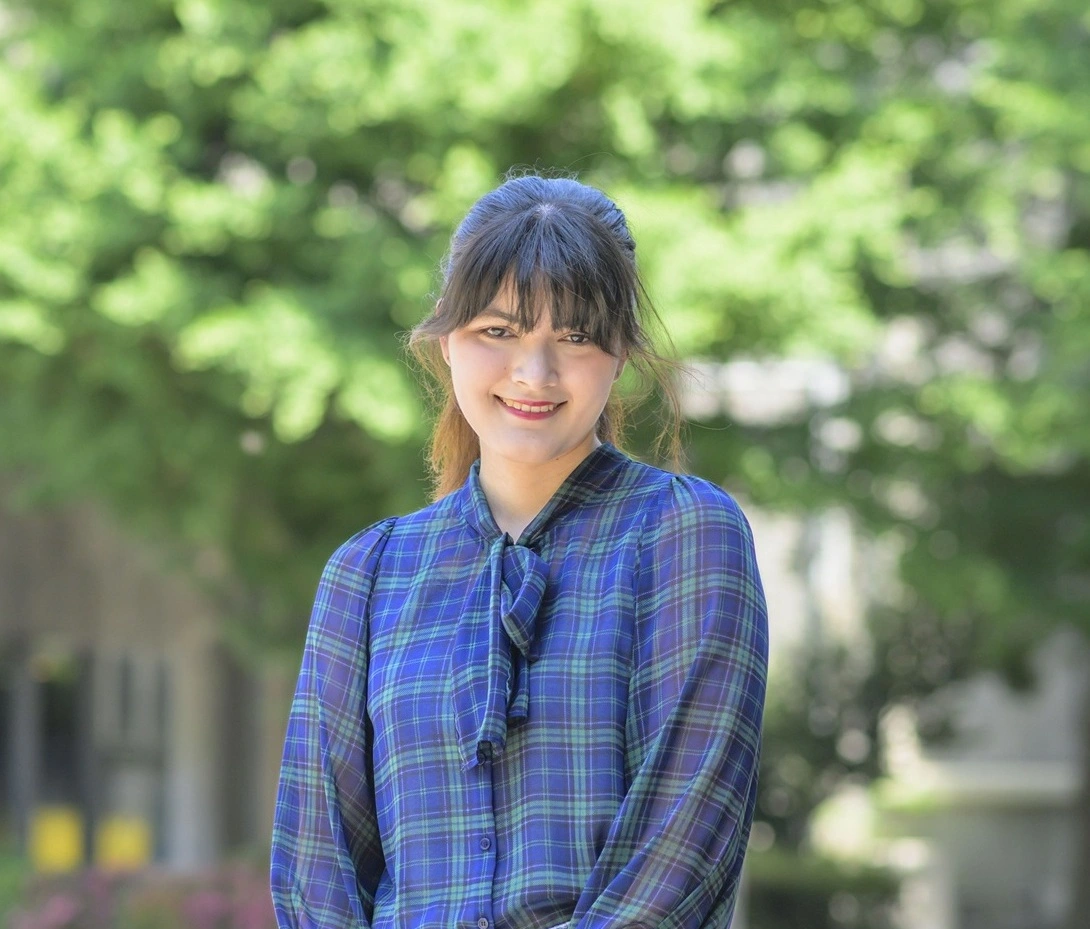
Hi everyone! I’m Kate, a third-year student in the Department of Physics at Science Tokyo. For my first blog as a Student Ambassador, I’d like to introduce my third-quarter routine. Alongside lectures and laboratory work, I’m writing a liberal arts thesis, preparing to study abroad, and working part-time three days a week.
| About Student Ambassadors |
|---|
| Science Tokyo’s Student Ambassadors are appointed to be the face of the Institute for prospective students and their families. They post about their academic and social lives at Science Tokyo, and share their experiences in undergraduate, master’s, or doctoral programs in various science and technology fields. |
Kate Kishida
School of Science
Bachelor's degree program
My third quarter timetable
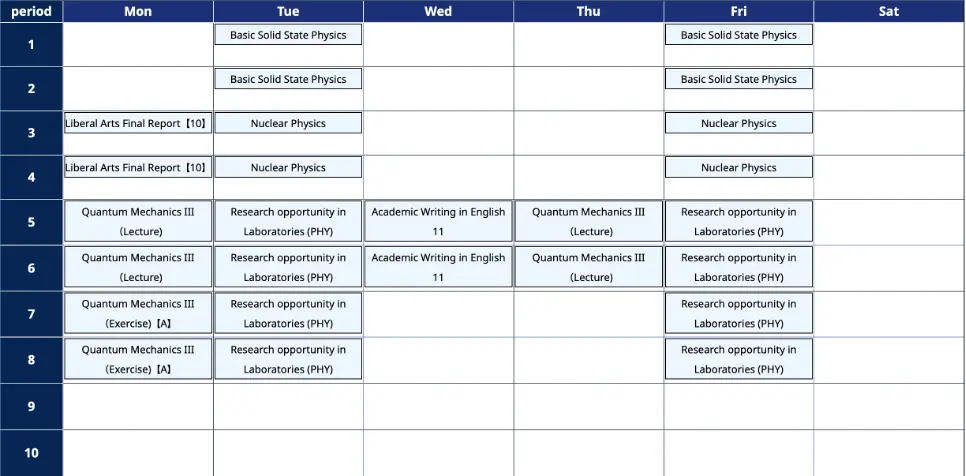
My physics courses this quarter include Quantum Mechanics III, Basic Solid State Physics, and Nuclear Physics. Tuesdays and Fridays are particularly full: morning lectures are followed by laboratory work in the afternoon. Mondays and Thursdays include quantum mechanics, while Wednesdays give my week a different focus through Academic Writing in English.
Exercise classes
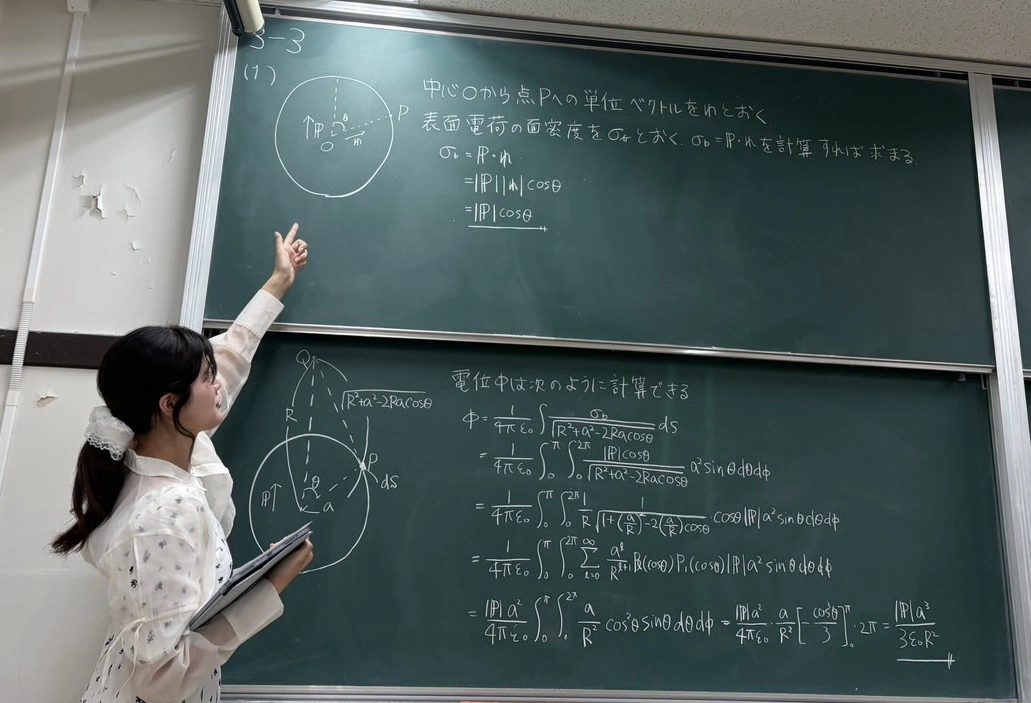
One characteristic of physics courses at Science Tokyo is that lectures are followed by exercise classes, where we put what we have learned into practice. Lectures introduce concepts and their mathematical descriptions, while the exercises help us deepen our understanding by working through problems ourselves. On Mondays, for example, my Quantum Mechanics III lecture is followed by an exercise class.
We also have opportunities to present our solutions. Photo 2 shows me presenting in an exercise class during the second quarter. Explaining a calculation to other people means thinking about why each step is valid, rather than simply reaching a final answer. Preparing an explanation is a useful way to check my understanding and practice communicating mathematical ideas clearly.
Experiment classes
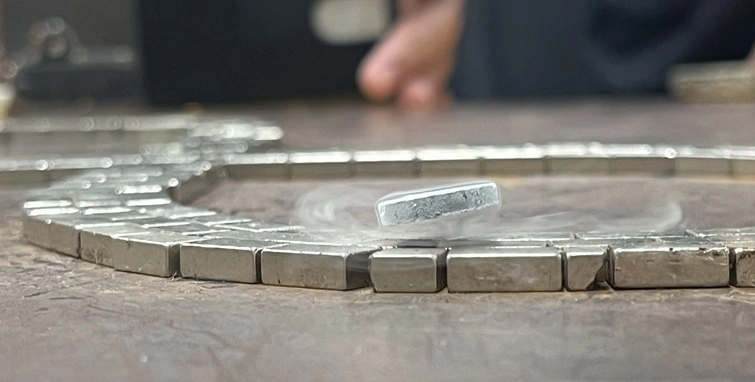
The most challenging class for me this quarter is Research Opportunity in Laboratories. One topic I have worked on is superconductivity. We cooled a sample with liquid nitrogen and explored its magnetic behavior through a magnetic levitation demonstration, shown in Photo 3.
Laboratory classes give us a chance to see physical phenomena firsthand and connect them to what we learn in lectures. Along with carrying out experiments, we analyze our results and discuss what they mean.
Writing a thesis beyond my physics major
A distinctive part of the third year in the science and engineering curriculum is the liberal arts thesis, which all third-year students are required to write. Science Tokyo places a strong emphasis on liberal arts education. Even as science students, we write a thesis that explores questions beyond our technical studies, including topics in the humanities and social sciences.
We are free to choose our own theme. This means the subject does not have to be directly connected to our major: it can begin with a question about society, culture, or another personal interest. The task is to turn that interest into a question and develop an argument in writing. Alongside learning how to solve physics problems, we have an opportunity to consider questions that require a different approach.
English classes
English classes are no longer compulsory for me in the third year, but I chose to take Academic Writing in English because I am preparing to study abroad in the United States.
On Thursdays, I also attend an English conversation session where I can spend an hour speaking with a native English-speaking teacher. It gives me regular time to practice expressing myself aloud.
Although the conversation session does not appear in my class timetable, it is part of my weekly routine. Choosing to attend is one way I use the time around my required courses to prepare for an opportunity I am looking forward to.
Balancing classes with three days of part-time work
Outside university, I work part-time on Wednesdays, Fridays, and Saturdays. Friday is especially busy because I also have laboratory work that day. Fitting work around classes takes planning, particularly when there are reports to finish.
Even with the demands of a physics degree, I have been able to make room for part-time work three days a week. It takes effort, but my timetable leaves space for activities outside my studies. How much someone can manage will depend on their courses and working hours; this is simply an example of what my own third-year schedule looks like.
Student Ambassadors
Discover Science Tokyo through the voices and experiences of our Student Ambassadors.
Contact
(science and engineering fields) Admissions Center