Sailors fourth at Spring 2026 Kanto Intercollegiate Student Sailing Competition
The Science Tokyo Sailing Team has finished fourth overall in the Snipe class of the Spring 2026 Kanto Intercollegiate Student Sailing Competition, held at Morito Coast in Hayama, Kanagawa Prefecture on May 5 and 6. This was the team’s best result to date in this competition.
Snipe class pairs
Yuta Ishiguro, 4th year, Mechanical Engineering
Haruna Suzuki, 4th year, Transdisciplinary Science and Engineering
Takuto Iwakoshi, 4th year, Systems and Control Engineering
Yamato Haga, 4th year, Chemistry
Ryutaro Hirai, 4th year, Systems and Control Engineering
Tadanao Shibata, 4th year, Materials Science and Engineering
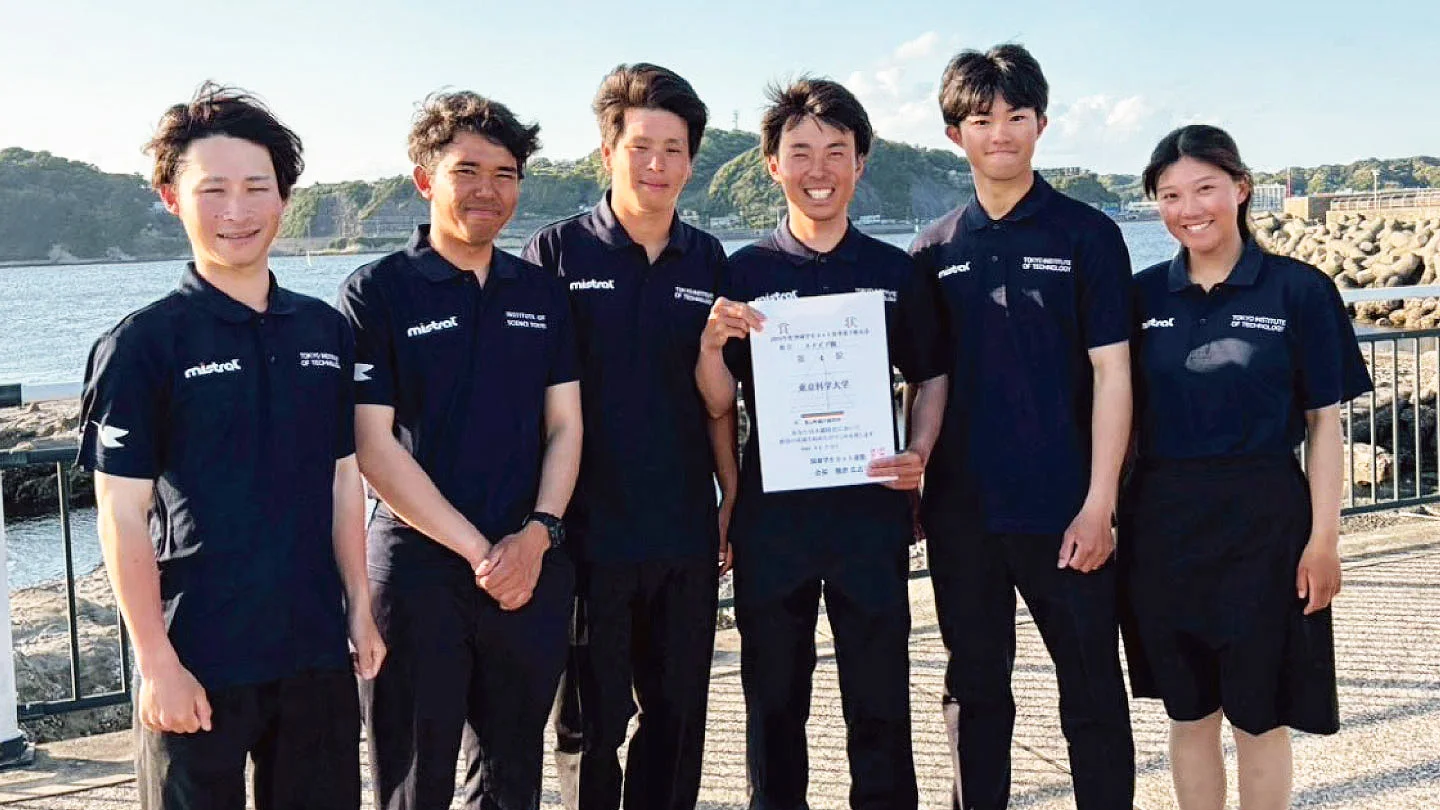
At the Kanto regional contest, each participating university sends out three pairs who compete for total points and an overall team ranking. This year, Science Tokyo finished fourth out of fifteen competing universities. As a seeded team, the Science Tokyo Sailing Team is now exempt from the qualifying rounds and will progress directly to the finals of the 93rd Kanto Intercollegiate Student Sailing Competition, to be held in September.
Comments from participating sailors
Snipe class crew member Haruna Suzuki
This was our first intercollegiate competition this season, and by finishing in fourth, we were able to see our growth and the results of our training.
I have also come to realize once again that, to improve further, it is most important to find meaning in every daily practice and approach these sessions with a clear sense of purpose. I believe this applies not only to sailing but also to how we approach our studies and research. Through a cycle of successes and failures, I have learned that continuously thinking about how to improve and valuing the process itself leads to better results. Since there is still much room for growth, I will continue to train diligently so that we can aim even higher at the fall intercollegiate races.
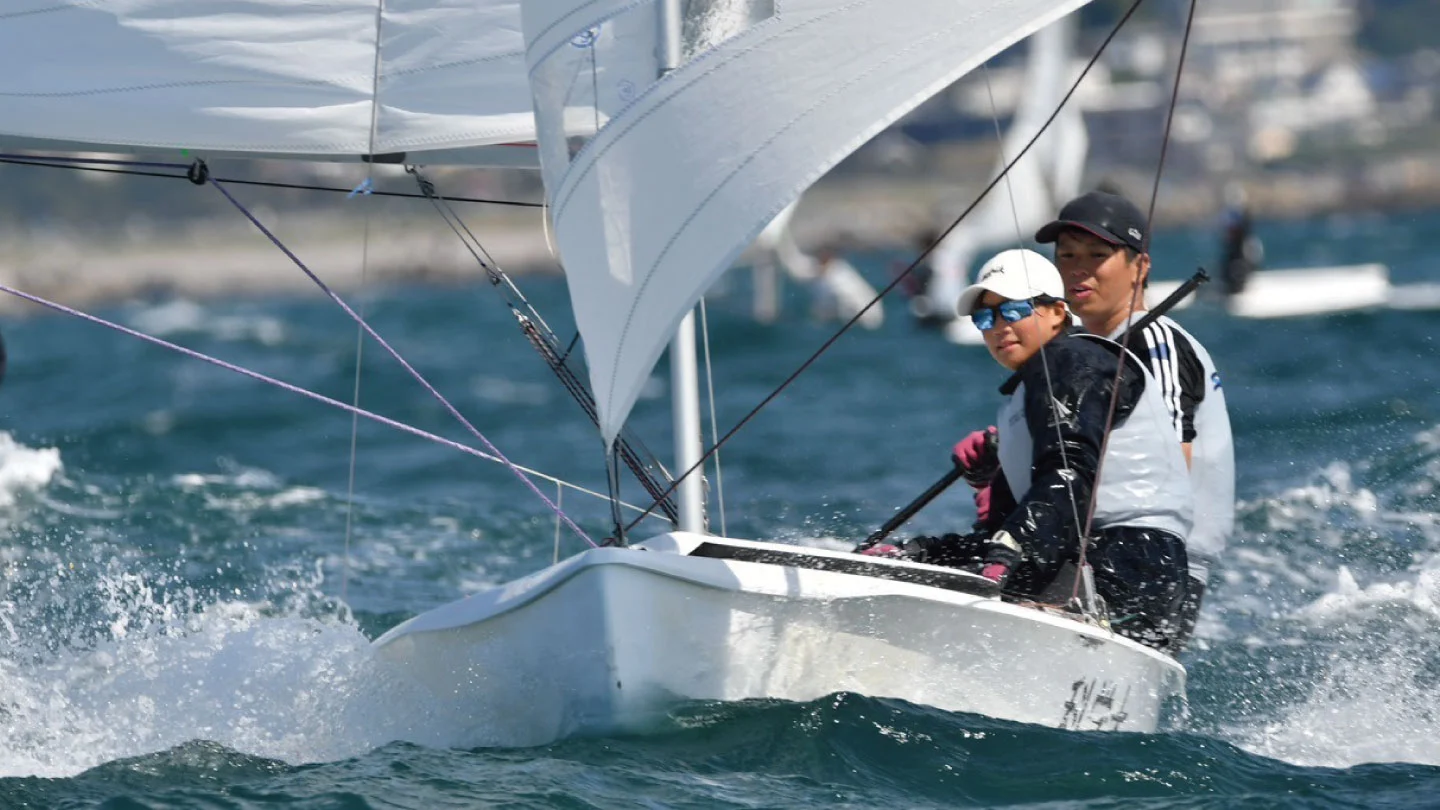
Snipe class crew member Yamato Haga
I am honored to have placed fourth at this competition. While other universities fielded teams with many experienced members, every one of us was a novice.
I am thrilled that our daily practices — marked by constant trial and error as we searched for paths to success — have finally paid off. I feel that this approach is deeply connected to the processes we engage in every day through our academic studies and research. Our next goals are a third-place finish at the upcoming fall intercollegiate competition and a top-six finish at the All Japan Intercollegiate Sailing Championships. We will continue to work together as a united team to meet these challenges and appreciate your continued support.
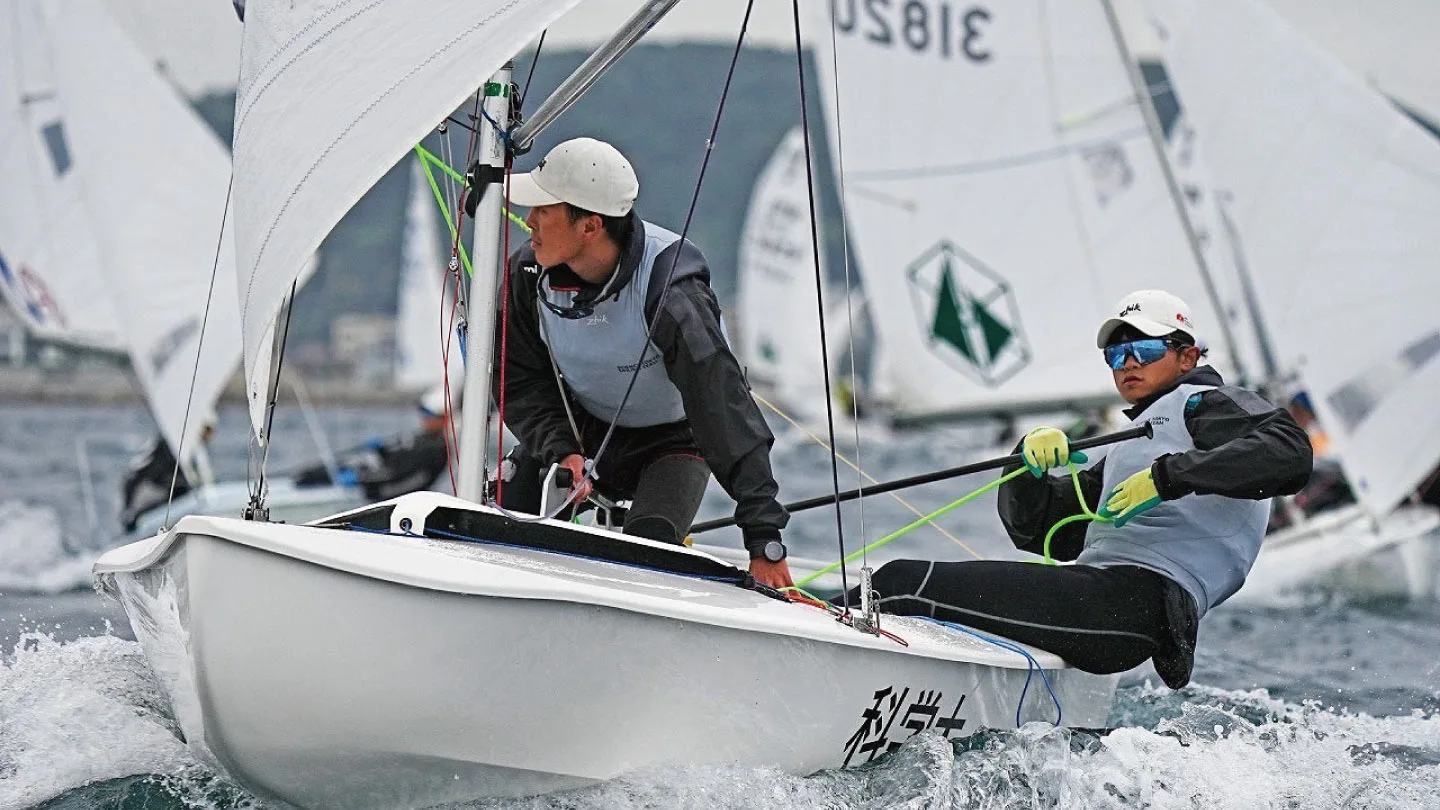
Snipe class crew members Tadanao Shibata
This competition was extremely tight, and even the slightest mistake could have significantly affected our team’s ranking, so each race was a tense battle. After the first race, we were in eighth place and had to fight our way back, but the entire team kept cool and fought hard until the very end.
Our pair had a period of uncertainty after failing to achieve the results we had hoped for during practice races over spring break. However, by reflecting on each race and implementing the advice we received from our seniors and coaches, we were able to achieve this result. We calmly analyzed the situation even when things were not going well and persistently experimented with solving various issues. This approach is directly applicable to our research activities as well. We will continue to work even harder so that the entire team can finish the All Japan Intercollegiate Sailing Championships with smiles on our faces and report good results to those who support us. Thank you to everyone for their support.
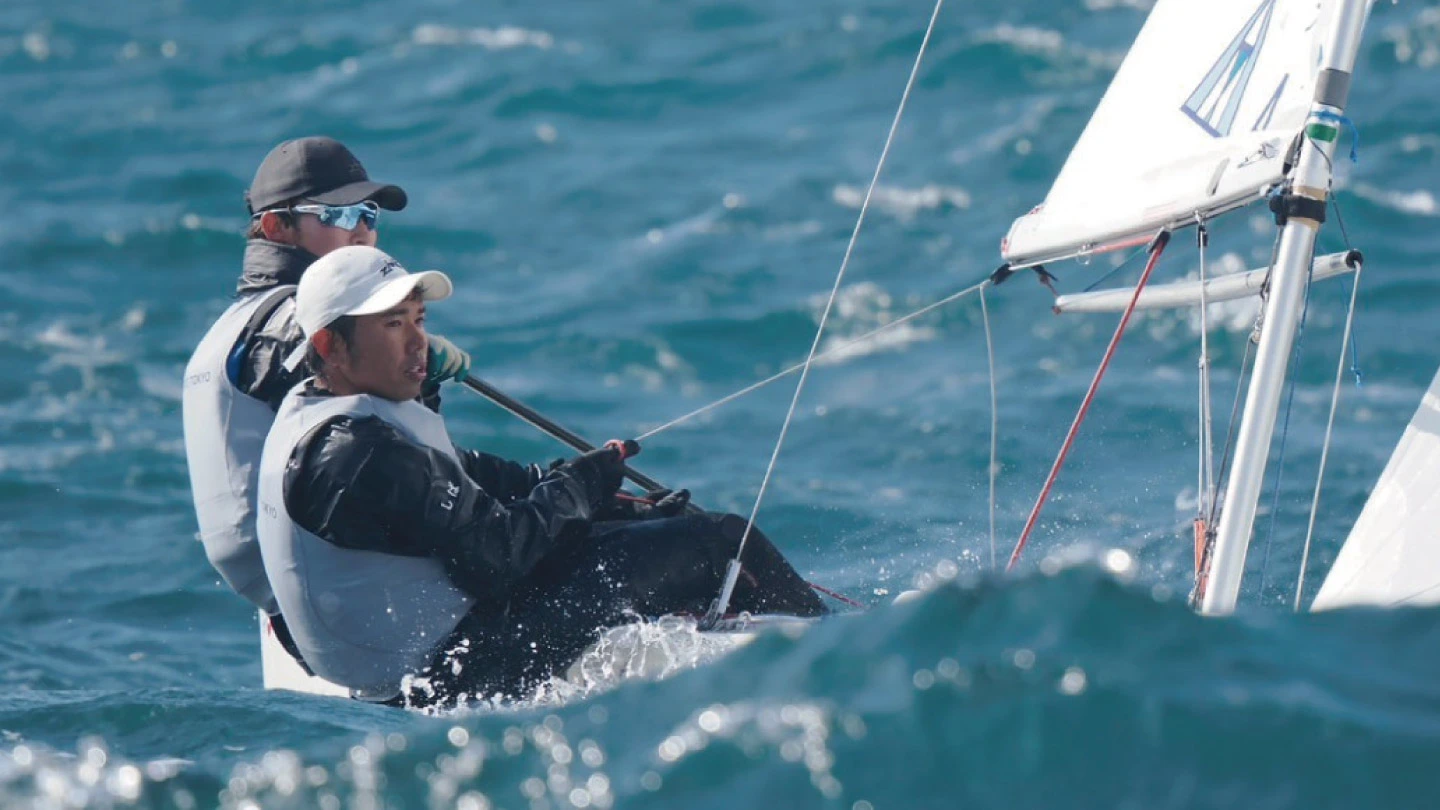
Competitive sailing
Competitive sailing is a highly strategic and tactical mental sport that requires competitors to read the constantly changing winds and tides, and determine an optimal course while maintaining speed. In a race, all participating boats start simultaneously and compete for finishing positions by navigating buoys set in the sea in a prescribed order. The All Japan Intercollegiate Sailing Championships feature competitions in two classes: the Snipe class and the 470 class.
Snipe-class dinghies use two sails — a mainsail and a jib. Speed can be hard to come by, so sailors must utilize the wind skillfully while maneuvering strategically in relation to the other boats. Sailors lean over the edge to achieve balance while hooking their feet under straps attached to the boat.
In addition to a mainsail and a jib, 470-class dinghies also use a spinnaker sail. This gives the boat more speed than a Snipe-class dinghy, but also makes balancing more difficult. To prevent the boat from capsizing, "trapeze" wires are attached to the boat, allowing sailors to hang outside the vessel with their feet on the edge of the dinghy.
In both the Snipe and 470 classes, a skipper and a crew member operate the boat as a pair. The skipper is in charge of steering the boat, mainly operating the mainsail, while the crew member balances the boat and decides on the strategy and course based on the surrounding conditions.
About Science Tokyo Sailing Team
The Science Tokyo Sailing Team has a long history and is fully supported by the Kuramae Ushio Association, an alumni association boasting 400 members. Their motto is "developing full-fledged sailors, full-fledged members of society.
The Science Tokyo Sailing Team is supported by the Science Tokyo Fund.